
Key Takeaways
- Start with a firm grasp of your business’s unique needs before choosing a server model.
- Processing power, memory, and storage must align with both current and future company demands.
- Factor in not just the upfront price, but also ongoing maintenance and potential for upgrades.
- Comprehensive security features are critical for safeguarding business data and compliance.
- Scalability will help your business avoid frequent, costly hardware replacements.
Selecting the optimal tower server as the digital backbone of your company can transform both day-to-day operations and long-term scalability. With options varying widely in performance, features, and budgets, understanding what to look for will put you in the best position to make an informed decision. For many organizations seeking flexibility and reliability, standalone tower servers provide a compelling balance of performance, easy upgrades, and office-friendly design.
Table of Contents
Whether supporting basic file sharing or powering complex applications, a well-chosen tower server keeps your business efficient, secure, and ready for growth. The features you prioritize should be tailored to your company’s anticipated workload, user demands, and physical workspace. Tower servers are particularly ideal for businesses without dedicated IT rooms, thanks to their self-contained chassis and straightforward setup.
Understanding Tower Servers
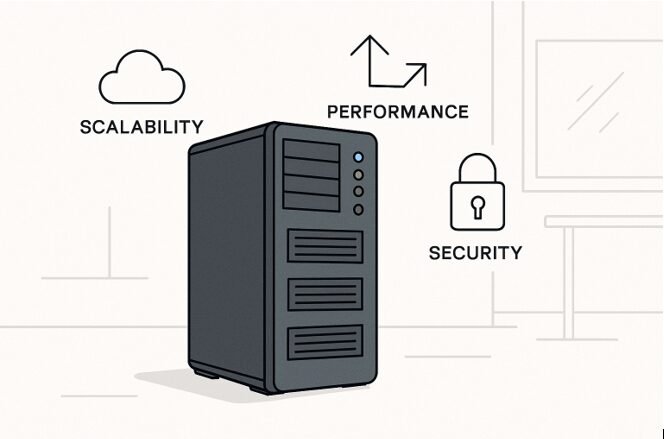
Tower servers are vertical, standalone computing units resembling desktop towers. Unlike rack servers, they don’t require specialized mounting hardware, making them an excellent fit for small offices or businesses without dedicated IT infrastructure. These servers are engineered for reliability and support a wide range of business applications, including file storage, email, virtualization, and more.
Due to their design, tower servers are quieter and more energy-efficient compared to other server types. The ease of access to internal components allows businesses to upgrade processing power, memory, and storage with minimal disruption, making them flexible as the company’s needs evolve.
Assessing Your Business Needs
Before investing, it is crucial to conduct a thorough analysis of current and anticipated server workloads. Key considerations include: the type of workload, such as office applications, network file storage, database hosting, or running virtual machines; the expected user load at peak times and their activities; and any software requirements dictated by business-critical applications or specific operating systems.
Addressing these factors ensures that the investment achieves an optimal balance of stability and performance, avoiding unnecessary costs or insufficient provisioning that could hinder business operations.
Key Factors to Consider
Evaluating technical specifications is essential to align with business operations. Focus on the following:
- Processing Power: Modern CPUs like Intel Xeon and AMD EPYC can efficiently handle multi-user environments and data-intensive applications. Select a model that meets your current needs and allows for future processor upgrades.
- Memory (RAM): The amount of RAM impacts multitasking and the number of simultaneous users the server can support. Err on the side of more memory if your budget allows, as many applications are memory-intensive.
- Storage Capacity: Solid-state drives (SSDs) offer the speed necessary for quick data retrieval, while traditional hard drives are preferred for cost-effective bulk storage. Consider hybrid solutions for the best results.
- Scalability: Choose a tower server that provides expansion slots and bays so your business can respond quickly to evolving data and user loads.
For more in-depth technical advice and performance benchmarks, resources like ITPro’s guide to the best business servers can help you compare models and configurations based on real-world use cases.
Top Tower Server Options
A range of tower servers is available to suit diverse environments and business scales:
- Dell PowerEdge T30: A reliable entry-level server using the Intel Xeon E3-1225 v5 and 8GB of RAM, suitable for small to medium offices and light workloads. It delivers value for businesses not ready to commit to enterprise-scale deployments.
- HP ProLiant ML350 Gen10: Built for scalability, this dual-processor tower handles demanding database and virtualization tasks. It comes with up to 256GB RAM to support larger organizations or those expecting fast growth.
- Lenovo ThinkSystem ST250 V2: Balances cost, flexibility, and power. It offers the Intel Xeon E-2300 CPUs and up to 128GB of memory, supporting growing teams and multiple simultaneous applications.
Be sure to assess compatibility with any business software or compliance requirements unique to your industry, as some vendors offer specialized configurations or certifications for healthcare, finance, or government sectors.
Cost Considerations
In addition to the purchase price, the total cost of ownership is crucial for long-term financial assessment. Key components to consider include: Initial Investment, which encompasses hardware and essential peripherals like backup storage or redundant power supplies; Maintenance Costs, which involve support contracts, software licensing, replacement parts, and the time invested by IT staff; and Energy Consumption, as many contemporary servers are designed for energy efficiency, potentially reducing operational costs while also contributing to sustainability efforts.
Security Features
Securing sensitive business data is essential. Look for tower servers that incorporate:
- Data Encryption: Encryption both in transit and at rest is increasingly necessary to comply with privacy regulations.
- Access Controls: Tight user authentication and authorization measures prevent unauthorized access to data.
- Regular Updates: Ongoing firmware and operating system updates help protect against the latest vulnerabilities and threats.
Planning for Future Growth
To ensure scalability of your tower server as data and business demands grow, consider the following key features: Expansion slots for adding storage, networking cards, or GPUs; support for memory upgrades that allow additional RAM without system replacement; and flexible drive bays alongside RAID configuration support for anticipated increases in data storage needs.
Conclusion
Deciding on the right tower server requires careful evaluation of your business’s current operations, future growth trajectory, and IT budget. By choosing hardware that offers flexibility, security, and room to scale, your business will be well-prepared to adapt to future challenges. Take advantage of available resources and consult IT experts when needed, ensuring your investment supports both immediate requirements and long-term objectives.